A bold, navy blue cover image with the words GP Frontline in white.

A public health emergency? Protecting children from online harms

Published on 15 April 2026


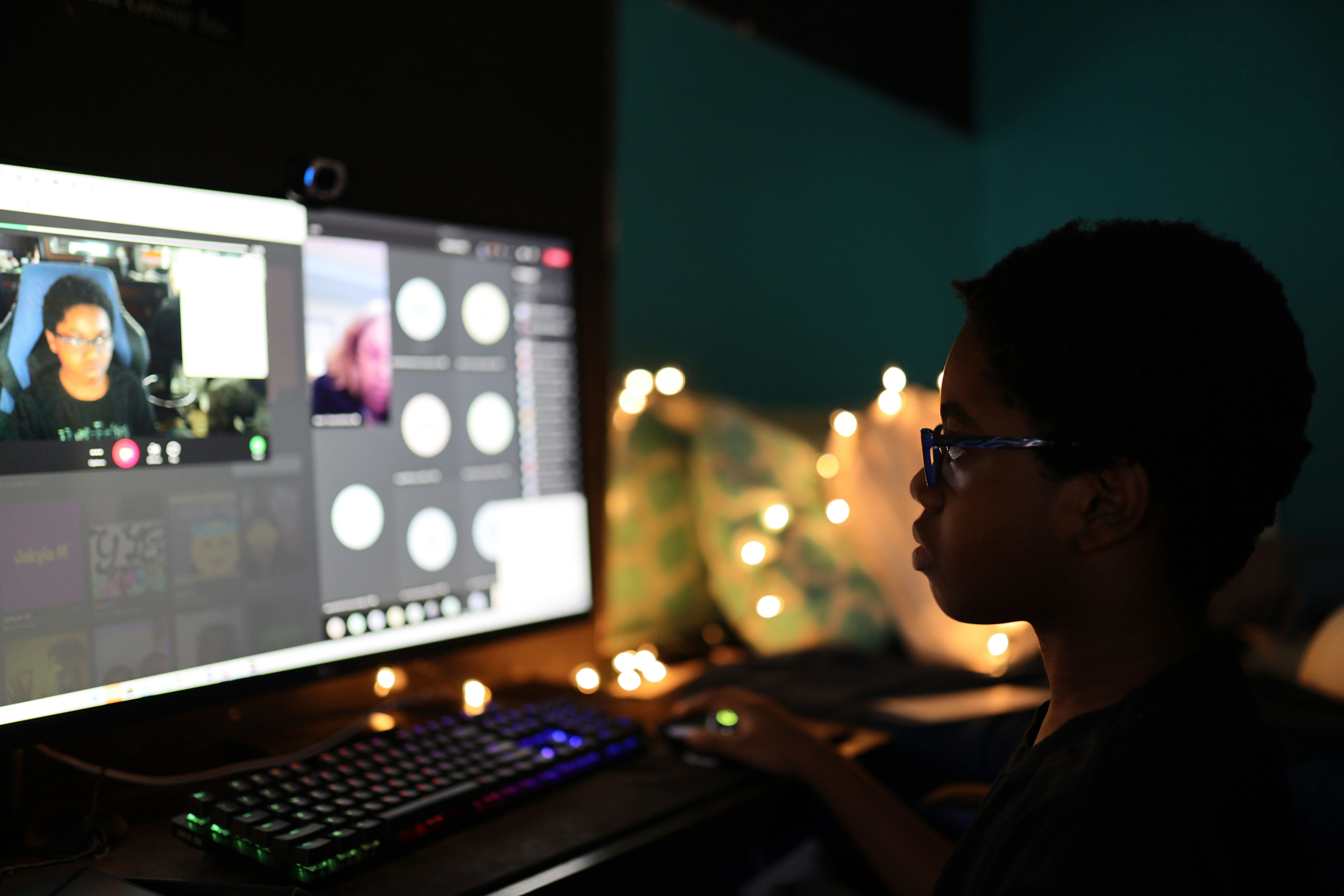
Children-online
Image credit: Ralston Smith

Late last year, Dr Rowena Christmas and Dr Shamila Wanninayake brought motion to RCGP Council on the need to protect child and adolescent wellbeing in the digital age. 

It came amidst a heated national conversation following high profile cases of serious harms linked to online activity, and media portrayals of its tragic impact in dramas, such as Netflix’s Adolescence. 

With general practice often the first point of contact for worried parents, the two GPs argued that the College should recognise the harm being caused to children and young people as a result of too much screen time and exposure to harmful content online. 

Their case was compelling, and College Council agreed, passing the motion convincingly. Many members shared experiences from their own practice, including of self-harm influenced by online content, sexual exploitation via social media platforms, and young people becoming isolated in their bedrooms with minimal real-world social interaction.  

The resulting position statement recognises digital exposure as a contributing factor in many conditions and behaviours, including anxiety, low mood, self-harm, disordered eating, sleep disturbance, attention difficulties, safeguarding concerns and school avoidance. 

It makes the case that digital harms should be understood as a population health issue, not individual choice or parental responsibility, and emphasises the need for preventative, child-centred approach, which includes: 

  • Early recognition and prevention: that digital harms should be considered routinely in health assessments, safeguardinwork and mental health presentations, with age-appropriate enquiry and guidance. 

  • Support for parents and carers: that families need consistent, evidence-informed advice that acknowledges the challenges of modern parenting rather than assigning blame. 

  • Professional education and guidance: that GPs and primary care teams require training, clinical tools and time to address digital harms effectively within consultations. 

  • System-level responsibility: that the responsibility for protecting children’s wellbeing must sit with policymakers, regulators and technology companies, not solely with families or clinicians. 

  • Equity and inclusion: that responses to digital harms must recognise and mitigate their disproportionate impact on children facing poverty, neurodiversity, disability or social adversity. 


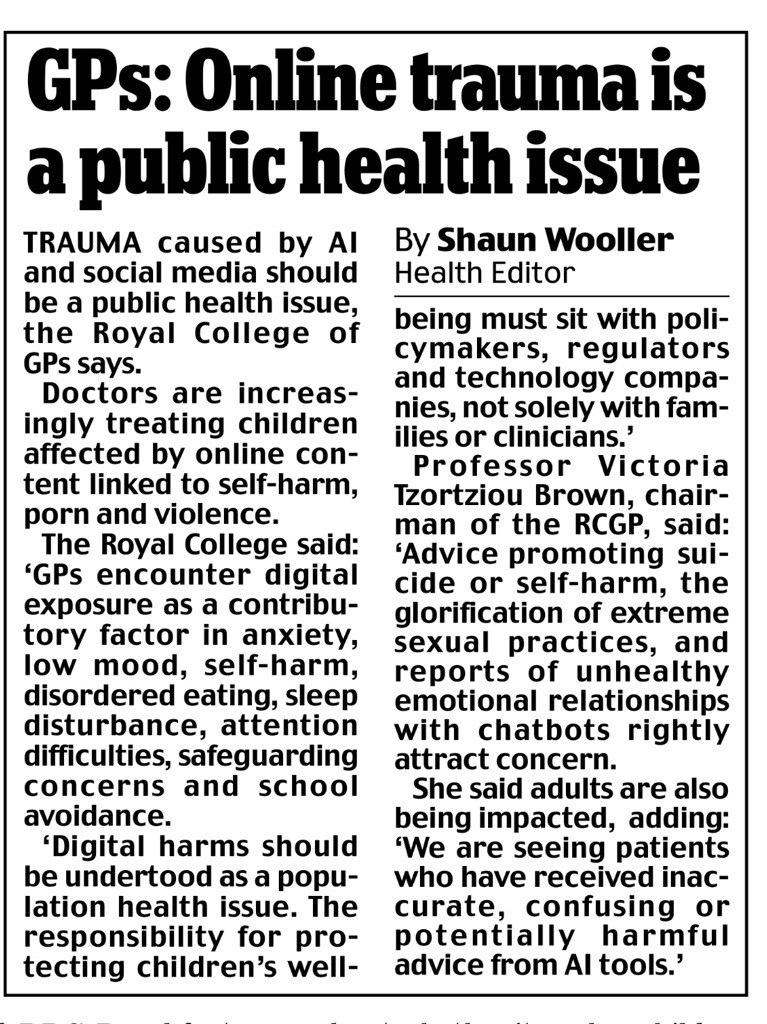
Daily-Mail-Clipping
Daily Mail coverage, 19 Jan 2026

The position statement was published in January this year and covered substantially in the Daily Mail with RCGP Chair, Prof Victoria Tzortziou Brown stating, “As a GP, and also as a parent, this is something I see both professionally and personally. Whatever safeguards families put in place to keep children safe online, once a young person has access to a smartphone, parental controls can only ever go so far.” 

In tandem, the RCGP is supporting the Academy of Medical Royal Colleges own work on this issue.  

The umbrella body hosted a roundtable event, bringing together voices from across medicine including GPs, paediatricians, and psychiatrists, reaching a consensus that the impact of online harms on children constituted a ‘public health emergency’.  Following this, the Academy wrote to Health Secretary Wes Streeting and Science, Innovation and Technology Secretary Liz Kendall  calling for action.