
An IMG’s journey
Published on 15 April 2026

Captured in time
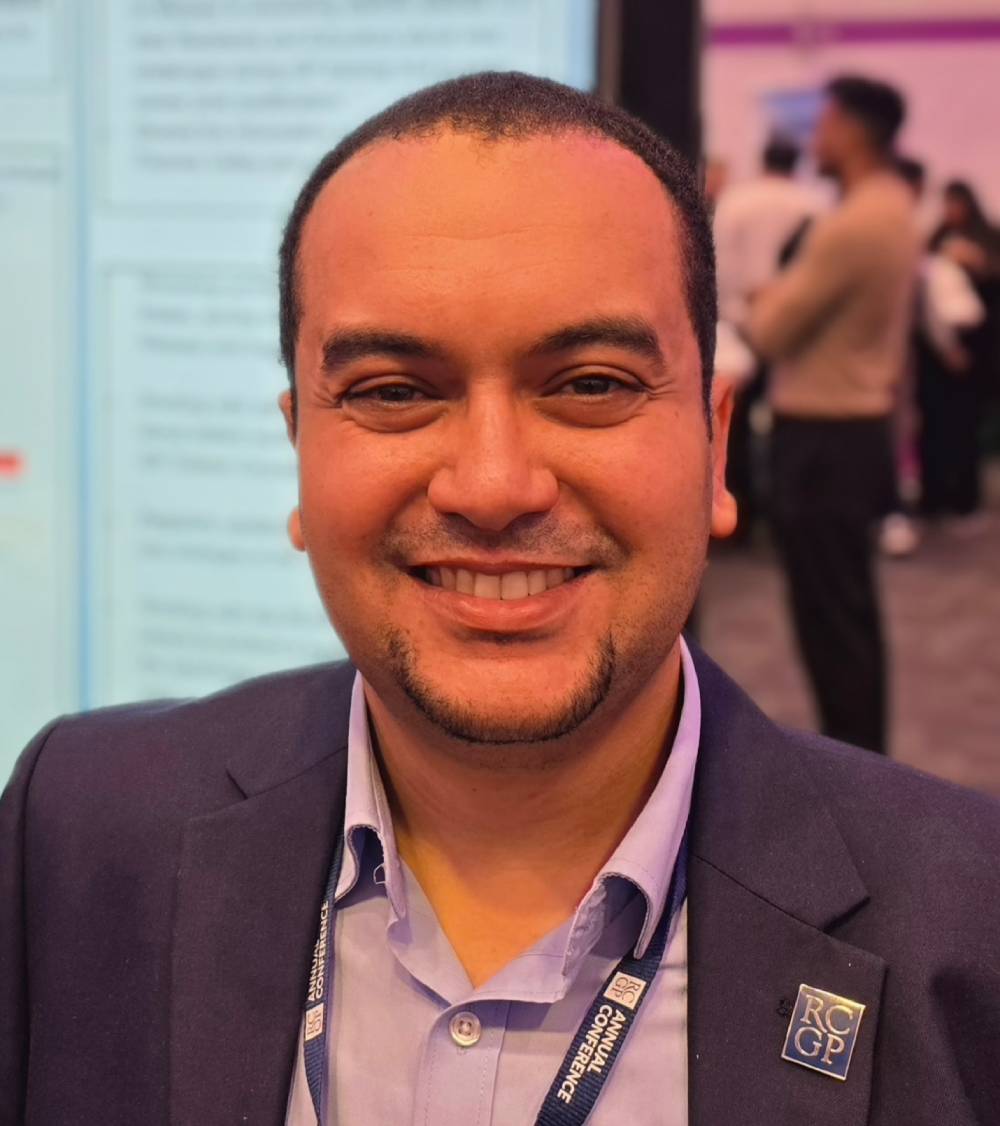
International medical graduates (IMGs) are crucial to the UK’s GP workforce and make a vital contribution to patient care. According to ‘The 2024 state of medical education and practice in the UK’ IMGs constitute 56% of GP specialty registrars and a significant proportion of the wider GP workforce.
Behind that contribution sits a pathway that is often more complex than it first appears. For many IMGs, the decision to train and work in the UK is driven not only by career progression, but the opportunity to contribute to communities in need of GPs. Even so, the journey to get there can be challenging, beginning before GP specialty training starts.
GP Frontline has spoken to Dr Mostafa Abdallah, an IMG from Egypt who has completed the process. He reflects on his experience: “I came to the UK because I wanted to build a stable life for my family and contribute to a healthcare system that needs GPs. But the journey is far from straightforward. Every step needs careful planning, learning, studying … and a lot of paperwork.”
The financial commitment begins well ahead of arrival in the UK. Dr Abdallah recalls how examination fees, international travel, visa applications and relocation costs accumulate quickly: “You need a lot of savings to come here — money, time, and hard work, all before your training even begins,” he says. Despite this, he adds that many IMGs see the investment as worthwhile, particularly for the opportunity to settle, build a career and become part of a local community.
Before an IMG can apply for a GP training place, they must pass the Professional and Linguistic Assessments Board (PLAB) examinations, secure GMC registration and provide evidence of good standing from previous posts. Once this is complete, applicants must compete nationally for GP training places through the Multi-Specialty Recruitment Assessment (MSRA), where scores determine ranking and location. "Some doctors may need to relocate to parts of the country they may never have lived in, let alone heard of,” says Dr Abdallah, “it can be a daunting prospect, but it also reflects the huge value these doctors bring to communities across the UK, often filling vital workforce gaps and providing essential care where it is needed most. ”
Securing a training post marks the start of the next administrative stage: the Skilled Worker visa application. The process is detailed and exacting. Applicants complete extensive forms, provide biometric data, undergo screening checks and pay further fees. Those relocating with family must submit separate applications for each dependent. Dr Abdallah describes it as a “big puzzle - if one piece is not in place, then your visa will not be given.”
When it comes to undertaking GP specialty training itself, IMG registrars are required to meet the same rigorous academic and professional standards as UK graduates. ‘It’s intense, to say the least,’ says Dr Abdallah.
He’s also clear that, as well as being an assessment of medical knowledge, for IMGs, GP specialty training is about adjusting to living in a new country and working in an unfamiliar health system. “It's a test of how you know the tools available and how to use them,” Dr Abdallah explains.
Passing MRCGP and achieving Certificate of Completion of Training (CCT) is not the end of the journey for IMGs.
Across the UK, IMGs in GP training are typically sponsored for their training visa by the relevant NHS body. Once training is complete, however, IMGs have four months to secure a position with an employer able to sponsor a Skilled Worker visa in order to be able to stay and work in NHS general practice.
What’s more, because GP specialty training only lasts three years, it does not in itself meet the five-year requirement for those who complete it to apply for indefinite leave to remain, meaning that securing a visa is the only option.
Yet, according to a recent College survey of 493 practice managers, just 29% of practices currently offer visa sponsorship. This is because, for many practices, the administrative burden and costs involved with becoming a sponsor are difficult to absorb, particularly at a time when they are struggling with workload pressures and operating within tight financial margins.
“If the four months pass and they don’t find a job, they must leave the UK. And if they do leave, their clock towards the five years needed for settlement is reset,” Dr Abdallah explains.
“It’s an issue the College has raised repeatedly with successive governments. It previously secured a four-month visa extension for IMG GPs on qualification and has subsequently written to the Home Secretary, urging her to allow for successful completion of GP specialty training to be sufficient grounds for IMGs to apply for indefinite leave to remain.
The College has specifically raised this in relation to the introduction of the Medical Training (Prioritisation) Bill, making clear that IMGs who are already training in the UK and those who secure training posts after implementation of the Bill must be valued and supported to remain in the NHS upon completion of training. In her letter to the Home Secretary, RCGP Chair Prof Victoria Tzortziou Brown acknowledged the Government’s goal to strengthen domestic recruitment into general practice but that this would take time. “IMGs are central to the delivery of general practice…it would be policy-incoherent to invest substantial public funds in training doctors, only to place settlement barriers in their way at the very point at which they are most needed by the NHS. Moreover, any perception that [IMGs] are less valued risks contributing to uncertainty and damaging narratives that undermine morale and retention,” she wrote.
Although the path to becoming a registered GP in the UK is a long and often tough one, Dr Abdallah reflects that “It was very difficult… but it was worth it. It allowed me to build a new life, continue developing as a doctor and care for patients in a community I now feel part of.”
Read more
Captured in time
3 min readThank you for your feedback. Your response will help improve this page.