
When there are no easy answers: the importance of ethics
Published on 15 April 2026

10 minute consultation - Jude Danby

Ethical questions are not occasional in general practice. They are constant. From balancing patient autonomy with clinical risk to navigating uncertainty, limited resources and wider system pressures while acting in the best interests of patients, GPs make complex decisions every day.
The RCGP’s Committee on Medical Ethics (CoME) exists to ensure ethical considerations are embedded across the College’s policy, guidance and educational activity. In doing so, the Committee considers ethical questions arising from a wide range of College work, carefully analysing issues, identifying competing priorities and weighing multiple factors rather than offering simple answers.

“When most people think of ethics committees, they think only of the big issues, like assisted dying or new tools such as AI,” Dr John Spicer, Chair of CoME, explains. “Those debates do play a role. But much of what we look at is the day to day such as poverty, inequalities and the pressures GPs face to name a few.”
The CoME has formal standing within the College’s governance structures and has representation on College Council. It brings together practising GPs from across the UK and this breadth of experience is central to its work, with discussions grounded in lived clinical reality and day to day experiences.
“All the issues we consider are relevant to frontline practice,” Dr Spicer says. “As practising GPs, we understand the pressures colleagues are under and the context in which decisions are made.”
Although much of its work takes place behind the scenes, the CoME’s impact on College work is significant as it provides structured ethical analysis and advice on policy development, educational resources and other emerging issues that may have implications for general practice.
“We bring our opinion, but not clear-cut answers,” Dr Spicer says. “Ethics is rarely, if ever, black and white. You have to weigh a multitude of factors.”
This approach is deliberate. Ethical questions in general practice often involve uncertainty and balancing risk. The CoME explores how principles such as fairness, respect, equity and transparency apply in these circumstances, helping the College respond in a way that is both principled and pragmatic.
Recent discussions around assisted dying are a clear example of how this work unfolds in practice. The CoME was initially asked to consider the potential implications for general practice when assisted dying legislation was being debated in the Isle of Man and Jersey. This came ahead of the Terminally Ill Adults (End of Life) Bill for England and Wales, and the Assisted Dying for Terminally Ill Adults (Scotland) Bill being introduced in Westminster and Holyrood respectively. CoME members discussed its possible impact on professional responsibilities and the GP-patient relationship, resulting in a set of principles that have gone on to assist the College’s influencing work in this area across the UK.
The CoME was also consulted ahead of UK Council discussions around whether the College should change its position on assisted dying, and representatives took part in the Council debate ahead of that decision.
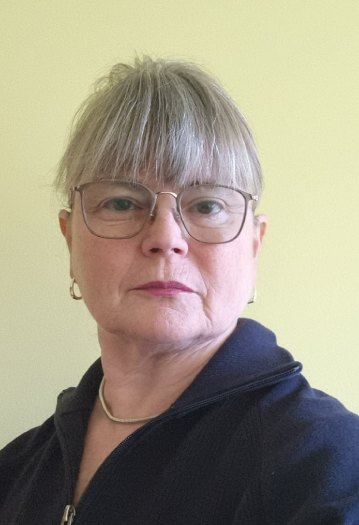
A key priority for the CoME is to ensure ethical reflection happens early. “Ethical considerations are often overlooked until there’s a problem,” Dr Grainne Doran OBE, CoME member and former Chair of RCGP Northern Ireland, reflects. “But ethical thinking shouldn’t begin when something goes wrong. It should have already been thought of and planned for. By contributing during the development of policy and guidance, the Committee helps embed ethical reasoning, rather than adding it on at the end.”
The CoME also promotes consistency across College work. By providing a dedicated forum for discussion, it aims to ensure similar principles are applied across different areas of activity, strengthening coherence and reinforcing trust with members, patients and policymakers which is often done by re-examining the relevant ethical theory and practice'.
New ethical challenges are always emerging.
“As healthcare continues to evolve, advances in digital health, persistent health inequalities and ongoing pressures across the system all raise important questions for the profession,” says Dr Doran. Its work may not always be visible, but its influence is embedded throughout the College’s activity. In a profession built on trust, Dr Doran says that ‘steady, structured ethical scrutiny mustn't be optional. It must be fundamental.’
“No matter what the topic is, ethics is always there,” Dr Spicer reflects. “It underpins every decision in general practice. It may not always be visible, but it is always present.”
Read more

Stepping up to GP partnership
3 min readThank you for your feedback. Your response will help improve this page.