
GP Lives: All things being equal
Published on 21 December 2023
Big Interview: The History Man
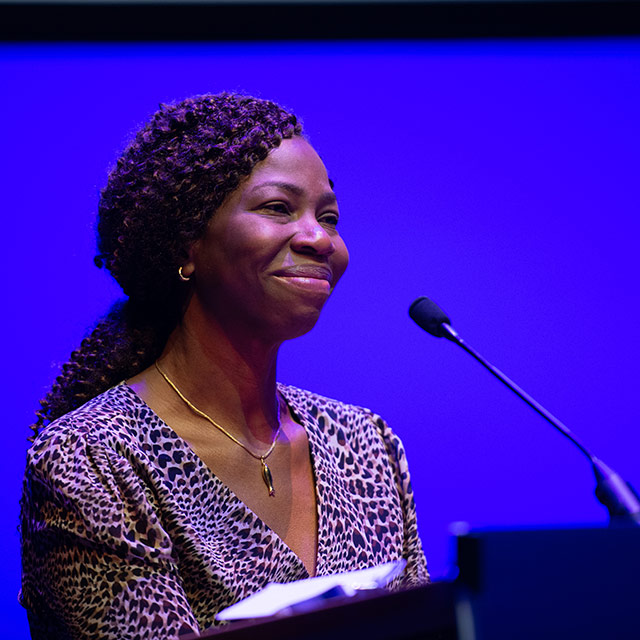
Professor Bola Owolabi is clear and determined about tackling health inequalities in primary care.
As director of the National Healthcare Inequalities Improvement Programme at NHS England, she describes its potential universal implementation in primary care as her idea of 'utopia'. Bola’s vision is exceptional quality healthcare for all; ensuring equitable access, excellent experience and optimal outcome. She is proud of the Core20PLUS5 approach which has been developed to reduce healthcare inequalities.
She combines her NHSE role with being a practising salaried GP at a practice in the Northeast Derbyshire village of Creswell near Worksop and attributes her tenacity to her upbringing in Nigeria and to her experience of losing her mother when she was still a teenager. It spurred her on to work 'incredibly hard' to raise the funds required for medical school, an education she had dreamed of from a young age.
'You do become resilient as a result of adverse life circumstances,' she said.
Her inspiration for becoming a doctor came when she was nine-years old and hospitalised with chickenpox. There, she was struck by the kindness of the female doctor who looked after her.
‘She was the loveliest kindest human being,’ Bola recalls. 'Although the doctor wasn't a GP, I credit her with the fact that I studied medicine.'
She also made good friends with the girl she shared a room with. Despite not speaking for ten years after leaving hospital, they were surprised to find themselves reunited at medical school at the University of Ibadan Nigeria and remain close friends to this day.
'We both decided we were going to be doctors during those weeks in hospital and met again at medical school,' she said. 'It was extraordinary.'
Bola's friend is now a consultant surgeon in New Zealand and the duo reconnected recently when Bola carried out a study tour of the region to review how health equity is addressed in their national healthcare systems and policies.
Bola initially set out to be a psychiatrist rather than a GP. Her consultant at the time told her she was 'far too bubbly' to be a psychiatrist. This only made her more determined, and she was accepted onto the Sheffield Psychiatry Training Programme, despite being 36 weeks pregnant with her second child at the interview.
She eventually turned to and specialised in general practice at the Rotherham Vocational Training Scheme and further along the line landed one of the most influential roles in tackling health inequalities across the health service. She believes her generalist insight and collaborative approach is invaluable in her current role at NHSE, as it was in her previous role as national speciality advisor for older people and integrated person-centred care at NHSE, where she led the Anticipatory Care workstream of the National Ageing Well Programme.
“I engage with all the programme teams across NHSE, from mental health to Primary Care to Learning Disability and Autism. I can bring the reality of my patients’ lives into policy and strategy decisions. And this means my patients are helping shape policies,’’ she said.
She has plenty of advice for aspiring medical students.
'You earn the right to be in this space. Don't expect to be handed anything on a platter. This means when you show up, you show up with authenticity and credibility. You should also lean into your support systems. There are no brownie points for independence but for interdependence.'
Bola also believes aspiring students should embrace their ‘imposter syndrome’.
'It can be a grounding force. Most people have a degree of imposter syndrome. It is part of being human. It reminds us that we are not the best at everything and that we need others.'
Read more
GP Lives: A privilege to be a GP
3 min read
GP Lives: A message from Kyiv
5 min read
GP Lives: From sports medicine to TV stardom
5 min read
GP Lives: The positive side of social media
6 min readThank you for your feedback. Your response will help improve this page.