From ambition to action: women's health is everybody's business
Publication date: 20 October 2026
In this week's blog, RCGP Scotland's Clinical Lead for Women's Health, Dr Sigi Joseph encourages members to use Menopause Awareness Month to support better conversations and earlier recognition and care of women's health.
Everybody's business
In general practice, women's health is not a niche interest. It is woven through almost every working day.
These varied consultations remind us that women's health is not a single stage of life, nor is it confined to reproductive health. It is lifelong, interconnected and central to the work of primary care.
Scotland recognised this when, in August 2021, it became the first country in the UK to publish a Women's Health Plan. Its long-term ambition is both simple and profound: that women and girls enjoy the best possible health throughout their lives. Five years on, that ambition remains as urgent as ever, because a plan can set direction, but only collective effort can change culture and improve outcomes.
A strong foundation
Phase One created much of the infrastructure needed to make lasting change possible. Scotland appointed its first Women's Health Champion, Professor Anna Glasier, and established Women's Health Leads across NHS boards. It developed a lived-experience programme, strengthened professional networks and created a dedicated Women's Health Platform on NHS Inform.
That platform gives patients trusted, practical information across the life course. It includes guidance on pelvic floor exercises, symptom trackers for menstrual health and menopause, mental health self-help resources and information on subjects ranging from periods and contraception to heart health and healthy ageing. At a time when misinformation can travel faster than evidence, directing patients to a reliable national source is a meaningful clinical intervention in its own right.
There are also campaign materials, including waiting-room posters, which practices can use to help patients find this information. A poster will not solve an access problem, but it may give someone the language, confidence or prompt they need to begin a conversation.
From Phase One to Phase Two
Published in January 2026 and informed by the experiences of women and girls across Scotland, Phase Two moves us from establishing the conditions for change towards accelerating delivery. It contains four priority programmes: transforming gynaecology services, eliminating cervical cancer, improving understanding and support for women's brain health, and using innovation to improve care. Around these sit 40 new actions spanning research, data and information; prevention and early intervention across the life course; gynaecology and reproductive health; and equitable abortion, sexual health and contraception provision.
Some of its most important ideas appear deceptively simple. One Key Question invites an appropriate, person-centred conversation about whether someone wishes to become pregnant, opening a route to either preconception support or contraception without making assumptions. The commitment to develop a minimum dataset for menstrual parameters is similarly significant. If cycle length, regularity and bleeding volume are recorded consistently, menstrual health begins to be treated as a meaningful indicator of health.
These actions illustrate the cultural shift we need. Better women's healthcare does not necessarily begin with a new clinic referral or investigation. Sometimes it begins with asking the right question, recording the answer and taking it seriously.
Menopause Awareness Month: awareness must lead to action
Menopause Awareness Month gives us an opportunity to challenge stigma, correct misinformation and remind women that support is available. Awareness, however, is only the beginning. Women need clinicians who can recognise the breadth of menopausal symptoms, consider differential diagnoses, explain hormonal and non-hormonal options clearly to enhance shared decision making and where needed timely access to specialists.
Menopause also offers a valuable point at which to consider future health. Alongside symptom management, conversations may include cardiovascular risk, bone health, physical activity, sexual wellbeing, mental health and the effects of premature or treatment-induced menopause. This is precisely where the continuity and generalism of primary care are powerful. We can see the whole person, not simply a hormone level or an isolated symptom.
Designing services and evidence around women’s needs is not special treatment; it is competent, equitable access to healthcare.
Knowledge, confidence and connection
There exists practical support for primary care teams wishing to strengthen their knowledge. TURAS hosts menstrual-health education designed to help general practice professionals recognise typical and atypical patterns, identify conditions requiring investigation and offer appropriate management. Its menopause module supports an engaged, person-centred approach to the changes associated with menopause.
The RCGP has also developed endometriosis education, including a podcast, to support earlier recognition and management of this common condition. Scotland's endometriosis care pathway, available through the Right Decisions platform, helps clinicians navigate management and referral across primary, secondary and tertiary care.
No GP or primary care professional needs to know everything. We do, however, need to recognise what matters, know where to find reliable guidance, understand our local pathways and be willing to revisit a diagnosis when a woman's symptoms persist. Expertise grows through education, reflection, shared cases and robust interface working with specialty colleagues.
A new general practice network
The commitment and enthusiasm for women's health across Scotland is unmistakable, and the role of primary care is vital. To turn that energy into shared learning and practical improvement, the Scottish Government has established a Women's Health General Practice Network.
The network will provide a forum for peer support and the exchange of useful, innovative practice. Its scope will extend beyond reproductive health to subjects including bone health, brain health and incontinence, always considering the particular needs and experiences of women. It will meet at least twice a year in one-hour lunchtime sessions, combining expert spotlight presentations with discussion of the many opportunities to improve women's health within everyday primary care consultations.
This matters because national change is built through connection: the question asked rather than avoided, the symptom believed rather than minimised, the pattern recorded rather than overlooked, the referral made through a clear pathway and the patient given reliable information before she leaves the room.
Our call to action
The Women's Health Plan gives Scotland direction, resources and a shared ambition. That work belongs to all of us: GPs, nurses, pharmacists, allied health professionals, reception and administrative teams, specialists, educators, policymakers and, crucially, women and girls themselves.
This Menopause Awareness Month, I would encourage every practice to choose one practical action. Share the NHS Inform platform. Display the campaign materials. Complete a TURAS module. Review the endometriosis pathway. Discuss how menstrual health is recorded. Ask whether women in your community face barriers to contraception, screening or specialist care. Join the new network and bring both your successes and your frustrations. The College also recently launched a new GPwER Framework for Women's Health which I would encourage you to look at.
Scotland has already shown leadership by being the first UK nation to publish a Women's Health Plan. The next measure of success will be implementation: ensuring women in any part of Scotland feels listened to, informed and able to access the care she needs. The ambition is bold, but it is achievable. If we learn together, ask better questions and use every primary care contact as an opportunity, we can help make the best possible health throughout life not merely a national aspiration, but the lived experience of women and girls across Scotland.
About the writers
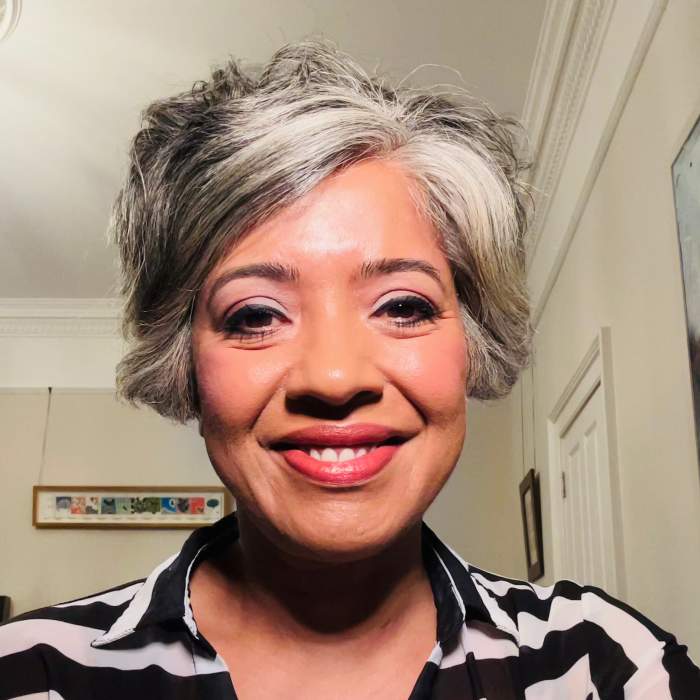
Dr Sigi Joseph
GP and medical educator
Thank you for your feedback. Your response will help improve this page.