Dr Mason's annual letter - My Chair’s priority
Publication date: 13 November 2026
My first term as Chair saw a priority that focussed on retention being a key component of “Building a Workforce Fit for the Future”, but over the last year our focus has turned to “Safeguarding the future of general practice in Northern Ireland”
Following extensive engagement through the early part of this year with GPs of all ages and career stages, practice managers and patients, we gathered a significant body of quantitative and qualitative evidence. This informed the paper which sets out what is required to secure a sustainable future for general practice and to ensure that GPs have a central voice in shaping the future of health and social care reform. Its six recommendations for stability and sustainability should be seen as an essential foundation not only for the future of general practice but also for the successful implementation of the Neighbourhood Model of Care.
We were delighted to launch this on 22 September in the Long Gallery at Parliament Buildings. The event attracted significant media interest and was attended by representatives from the Department of Health and the Strategic Planning and Performance Group, including the Chief Medical Officer, Deputy Chief Medical Officer, Permanent Secretary and the newly appointed Health Minister, Robbie Butler, who gave a right of reply following a political panel and stakeholder panel discussion.
Both panels expressed strong support for the paper's recommendations and engaged in a lively discussion with attendees during a question-and-answer session.
The positive response reinforced the broad consensus that a sustainable and properly resourced general practice service is fundamental to the delivery of wider health service transformation in Northern Ireland.
We hope to build on this launch with ongoing political and wider stakeholder engagement particularly as we face into a 2027 Assembly election. It was clear from our engagement with patients and their representatives during the process that next steps will include a collaboration with our patient network and the Patient Client Council.
A key recommendation and underpinning many of the others in this paper is to develop a fully costed time bound and comprehensive general practice strategy.
Throughout the last year we have been separately lobbying for a specific GP strategy and were pleased to be invited to join a small reference group comprising the Director of Primary Care at DoH, Head of GMS at SPPG, an NIGPC rep, a Federation rep and the Primary care Network Lead to develop a Vision for General Practice. In March this year a GP Vision workshop took place with over 80 attendees. RCGPNI had a number of representatives take part including the Chair of our Patient Network.
Considering what the future should look like, the day set out the challenges, as well as the benefits, the enablers and the support required. . The resulting post workshop report has formed a starting point for the reference group to take forward plans for a GP strategy. Now under the remit of a new Director of Primary Care, there is a renewed momentum to move forward with development.
Policy and media
It has been another busy year for RCGPNI not least due to the sheer volume of our engagement with stakeholders across multiple aspects of government and arm’s length bodies. I remain much more comfortable in the consulting room with patients than at the end of a microphone, but I hope I have been able to use my experience to bring authenticity to my representation when it comes to the policy and media aspects of my role as RCGPNI Chair.
I try to reflect the reality of on-the-groundwork in general practice and what impact decisions taken at a departmental level mean for GPs, our teams, and for our patients. I also endeavour to try to influence and advocate for our profession and for our patients when proposals are not in line with quality general practice care. Your college will continue to represent you and advocate on your behalf be that in newsprint, online, radio or TV.
Our team is a small one, but mighty in commitment and output. Dr Emma Murtagh, our Vice Chair Policy, continues to bring a wealth of experience and expertise to the role. While we work together on many aspects of policy Emma has been particularly involved in the DoH palliative care scoping review and importantly her spearheading the advocacy work around support for mental health and burnout and the need for a practitioner health service.
Consultations and evidence
Over the last year we have responded to a number of consultations most notably has been the consultation and evidence session to the Health Committee in relation to the draft Adult Protection Bill with subsequent engagement with the bill writing team.
We have had follow up meetings with health committee members in relation to this bill in addition to a proposed safe staffing bill.
We have also responded to the NIPSO in relation to an own initiative enquiry into services for learning disabled patients and provided a response to the consultation on 'Options to restrict or stop the routine prescribing of selected medicines in primary care | Department of Health'.
Following on from a previous consultation response to a call for evidence in relation to palliative care services, the Health Committee requested a Baseline Scoping of Adult Palliative and End of Life Care Services in Northern Ireland. Our initial evidence centred around the importance of the delivery of generalist palliative care services provided by GPs, and we were keen to ensure the scoping review included GP delivered care. I was invited to sit on the steering group and Dr Emma Murtagh represented the College on the task and finish group that examined the evidence and data around current provision and the development of an initial report.
While awaiting formal publication the report provides a more robust basis to begin to explore how our HSC system commissions and develops services and how, where and when we care for the increasing palliative and end of live care services we provide moving forward.
Staying with the Health Committee, we have continued to foster excellent relationships with many of the members as well as continuing to provide an opportunity for other MLAs to engage through our All Party Group on General Practice.
While the Health Committee were key supporters of our policy launch, we have also met with members throughout the year, most recently as part of some pre-election round tables and also around digital reform and GP access following a visit by members to a number of practices in London.
During 2025 Dr Emma Murtagh and I gave evidence to the Public Accounts Committee during their enquiry into GP access. In December the committee launched their report, and we had a further opportunity to engage with the committee at the launch and then subsequently following the response by DoH to the recommendations set out in the report.
Stakeholder engagement
I continue to have quarterly meetings with the Head of General Medical Services (GMS) and regular contact with our Chief Medical Officer through formal meetings and representation through the steering group for the Departmental “Big Discussion”. This initiative was developed to support previous years Winter Planning efforts and has seen a number of workshops and the development of a number of pathways designed to improve access to care for our frail elderly population.
I was directly involved in the workstream supporting the implementation of the policy framework on Advance Care Planning “For Now and For the Future". While progress has been positive it has stalled due to an inability to identify funding for key staff and project support. To that end I have subsequently written to the Minister for Health in conjunction with my Medical Royal College colleagues to ask him to support and identify a funding stream to allow this key policy to advance.
The Big discussion has now formally stood down but there remains an ongoing emphasis on a key stream championed by our CMO in relation to SENSIBLE care, a value-based, patient-centred approach to delivering sustainable healthcare in Northern Ireland. The acronym SENSIBLE encapsulates the programme's core principles: Sensitive, Evidence-based, Necessary, Safe, Individualised, Balanced, Logical and Equitable. Its overarching aim is to encourage warranted variation in care while reducing unwarranted variation, ensuring that patients receive the right care, in the right place, at the right time
We were delighted to welcome Prof Sir Michael McBride to our September NI Council meeting to present to members on this initiative and describe some of the early catalyst programmes which include primary care work on chronic kidney disease. We are planning further meetings with the CMO team in the coming weeks to advance the GP input to established programmes and try to identify opportunities for GP to lead on new projects.
I have also been fortunate to have been involved in a Medical Leadership Forum supported by the CMO and his wider team and have recently taken up the position of Speciality Advisor for General Practice on the Central Medical Advisory Committee.
Other stakeholder meetings include representation on the GP Speciality Training committee, the GP Training Numbers Task and Finish Group, QI Steering Group, HSCQI Alliance, MDT Steering Group, GMC UK Advisory Forum, Primary and Community Strategic Advisory Forum, GPIP Editorial Board and the E-Pharmacy Project Board.
Neighbourhood model for care
The last year has seen significant progress around the neighbourhood model for care. From early engagement with the DoH team and regular meetings with our Permanent Secretary for Health Mr Mike Farar, through to the consultation response in late 2025. We then supported engagement our NI Council and Executive Committee in a round table meeting and a webinar for the wider GP community. We sought to ensure that the GP voice was clear around the ask for stability of practices and funding as well as the need for clear GP leadership and we have been clear in our public facing statements around foundational stability being a perquisite for successful delivery.
We were also very clear in our lobbying that this model needed not just GP chairs for INTs but that a GP Advisor within the DoH would be a key component of success and were delighted when the Health Minister and Permanent Secretary agreed to the appointment of Dr David Ross who was co-nominated in conjunction with NIGPC.
Notwithstanding the real challenges faced by our colleagues in NIGPC surrounding the contractual negotiations, the recent agreement has allowed the pause in development of INTS to lift and for GP colleagues to resume engagement and development of these core teams.
RCGPNI is not directly involved in INT membership but Dr Frances O’Hagan, Chair of NIGPC and I meet regularly with Dr David Ross, and Dr Siobhan McEntee, Primary Care Network Lead who are supporting the INT formation.
Supporting you
The College is your professional home, and I sincerely hope that you see it as such. It is important that we strive to enhance the educational offering and to support you through all stages of your career. Dr John Goodrich, Vice Chair for Membership and Professional Development and our membership team support the provision of a varied programme of local CPD events both in-person and online.
Our key in person event this year included our one-day all-member event, “Thriving as a GP in Northern Ireland” in March. This was not just an opportunity to access a full day of CPD across clinical and operational aspects of practice we had something on offer for all career stages. If you missed out last year, don’t worry our 2027 event is set for Thursday 4 February so save the date or book online here.
We also held a one-day Paediatrics Symposium in collaboration with the simEd team at RBHSC in November and coming up this autumn is a return to our women’s health event held on Thursday 3 December in Belfast.
Other events have covered topics such as Managing Obesity and Weight Loss Medications, and a full programme of CPR training.
In addition to clinical learning the College has been supporting our members with non-clinical professional development which this year has included: Early career financial health webinar, Active bystander training, Medico-legal update, Pathway to partnership, From burnout to balance: retirement on your terms, 'Shaping the future' leadership programme, and Sustainability in general practice.
We supported the delivery of another fantastic Rural Health Conference in Enniskillen, working with Dr Miriam Dolan, RCGPNI Rural Lead, which saw a packed agenda and included a very thought-provoking session from Dr John Wynn Jones and a keynote introduction from the Health Minister Mike Nesbitt.
We were delighted to announce a new Student Travel Bursary at the event aimed at supporting students undertaking a rural GP elective.
We continue to host our annual New Members’ & Fellows’ Ceremony, and it was a pleasure to welcome our new members and their families to such a wonderful day of celebration as the culmination of all their hard work is recognised in the wonderful surroundings of the Titanic Hotel. For our new Fellows it is an opportunity to reflect on their positive contribution made to the profession, and to recognise and celebrate outstanding career achievements. Our ceremony this year took place on 7 November.
Staying with the positive, I am delighted that the RCGPNI GP and Practice of the year saw a combined nomination count of over 300 which speaks to the high regard that GPs and practice teams are held despite the negativity and challenges that surround general practice Our Patient Network judges had a very tough job and such was the calibre of nominations the award of Practice of the Year was a joint one. We were delighted to present this to Mourne Family Surgery in Kilkeel and Smithfield Medical Practice in Ballymena. The prestigious award of GP of the Year’ will be awarded next week and I will be announcing the name of the worthy winner in an upcoming blog.
In addition to these high profile awards the College has also presented the Chairs Award to the highest scoring trainee in NI in their exam and three First Five bursaries to support our younger GPs with opportunities to enhance their learning.
About the writers
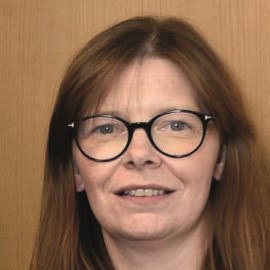
Dr Ursula Mason
Chair, RCGPNI
Thank you for your feedback. Your response will help improve this page.