
Published September 2026
About the report
This report sets out the role general practice can play in evidence based and equitable prevention, and the action needed across the health service and wider society to support it.
Prevention is central to improving the health of the nation. GPs and their teams already deliver substantial preventive care, including vaccination, screening, chronic disease management and health promotion.
But workforce pressures, rising demand, underinvestment and wider system pressures mean that GPs often struggle to find the time needed to prioritise prevention.
RCGP President, Victoria Tzortziou Brown
Hear from Victoria Tzortziou Brown, President of the RCGP, as she explains what needs to change to make to make prevention possible.
RCGP Vice President - Policy, Dr Munro Stewart
Dr Munro Stewart, Vice President - Policy and a GP working in a large busy surgery in Dundee, explains how prevention cannot be the responsibility of general practice alone.

Public trust
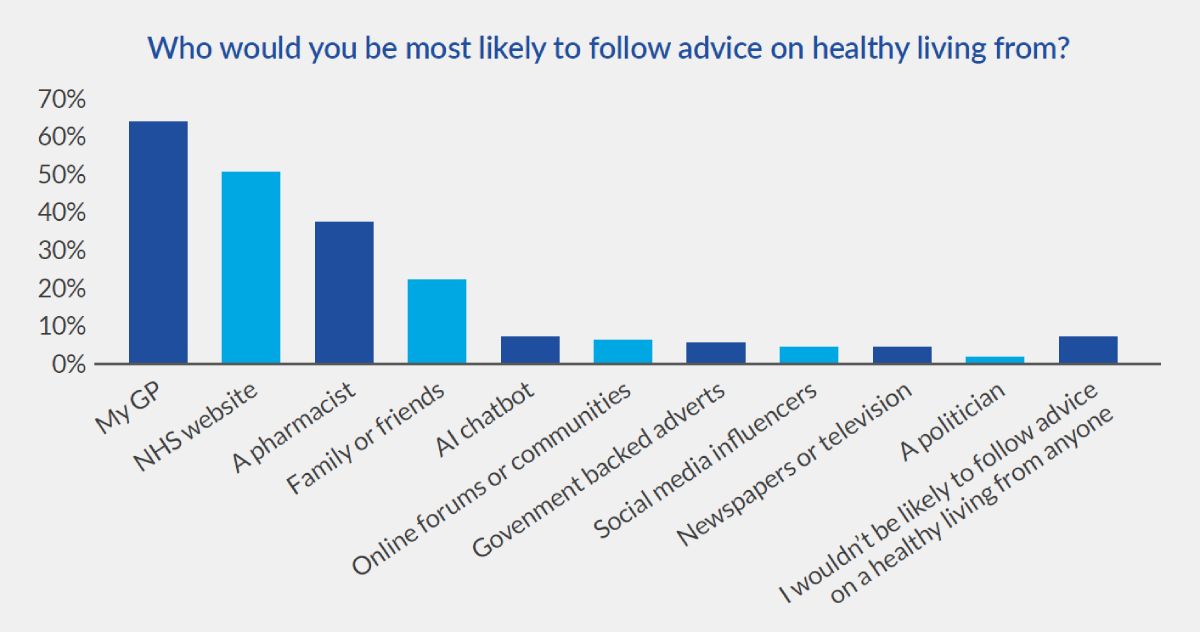
64% of people said they would follow advice from their GP
In terms of health promotion, our recent polling shows that patients are more likely to follow advice on prevention and healthy living from their GP than any other source.
But our members tell us that they struggle to find time to prioritise prevention as much as they would like. Instead, they feel constrained to focus on a predominantly reactive model of care with increasing pressure and expectation on urgent access.

Invest in frontline capacity for prevention
Increase NHS funding going to general practice and train, employ and retain enough GPs to offer longer consultations, deliver relational continuity of care and facilitate the time with patients.

Incentivise a generalist approach
Redesign incentive frameworks to better prioritise a proactive holistic approach.

Education
Ensure GPs have protected CPD time and that medical education equips doctors to engage with and appraise preventive interventions support patients to make evidence-informed decisions about their care.

Guidelines and policy frameworks
Ensure that evidence-based prevention is an explicit focus in clinical guideline and policy framework development.

Leadership
Ensure there is GP leadership within each neighbourhood or community health system, and on each ICB in England, Health and Care Trust in Northern Ireland and Health Board in Scotland and Wales.

Self-care and community resilience
Invest in health literacy, community-based interventions and nature-based solutions.

Screening
Ensure the long-term independence and authority of the UK screening committee to avoid harm from unwarranted investigation and healthcare without an evidence base.

Research
Establish an evidence base on prevention capturing longitudinal data to calculate and demonstrate its long-term clinical and economic impact.

Invest in infrastructure for prevention
Remove barriers to prevention in general practice by improving primary care premises and digital infrastructure.

Adopt a health equity in all policies approach
Alongside supporting prevention in general practice it is vital Governments take a cross-departmental approach to prevention.
Prevention in general practice
General practice has a vital role in prevention, but improving the health of the nation will require action far beyond the NHS through creating the social, environmental and economic conditions that enable people to live healthy lives. Within healthcare, general practice is the largest provider of personalised, evidence-based prevention. GPs and their teams already make a substantial contribution through vaccination, screening, chronic disease management and continuity of care. With the right investment, workforce capacity, and system design, general practice can play a critical role in improving population health, reducing health inequalities and reducing pressure on the wider system.
Delivering a meaningful shift towards prevention and creating a healthy nation will require not only appropriate investment but deliberate choices about service priorities.
By addressing workload, workforce capacity and prioritising continuity, the full benefits to patients and the wider NHS of preventive activity in general practice can be realised.
Thank you for your feedback. Your response will help improve this page.